Sunday, 18 December 2011

Solastalgia

Solastalgia


According to the Observer's Ethical Living writer Lucy Siegle ,philosopher Glenn Albrecht defines Solastalgia as the bereft feeling created by the change beyond recognition to a locality by the creation of a giant carpark, compulsory flooding or other change. In Fraserburgh's case by the devastation caused to the Strichen Road (officially James Ramsay) Park by the construction of a new swimming pool. Surely there are sufficient derelict and underdeveloped sites in the town for the park to have been unmolested by this development.

Thursday, 15 December 2011

Philorth Woods;after the hurricane

As a result of the hurricane occasional complete trees have been blown down  some living limbs have also been torn from trees and the floor of the wood is littered with fallen branches. Most of the branches seem to be brittle dead wood and the fallen trees seem mainly  to have had hollow or rotting trunks.

Morning sunlight catching a magnificent horse chestnut tree in the wood, fortunately undamaged by the storm.

Russet leaves catching the sunlight under bare trees

An ash tree has come down near the farmyard and has been cut into sections,  revealing the hollow trunk

Wednesday, 14 December 2011

Wintery Wastart

Grey Granite and Rufus walked over the Wastart to Haven of Braco in the beautiful, crystalline  light of cold Monday morning.  The Wastart was bejewelled with temporary lochans, reflecting the sky and thinly iced over, a distant covering of snow lay towards Troup. Grey Granite has never seen as much debris as has been blown up by the hurricane force winds of last week. The usual plastic waste on the lower path by Lochielair  and also large boulders at the edge of the car park and drifts of tangle etc. aginst the dyke by the  Tower. The necklace of eiders was strung out along the sea, there were oyster catchers  and red shanks on the rocks and we heard seals keening over towards Quarryhead.

This shot exaggerates the height of the rocks on the Round Brae but captures the quality of the winter sunlight


Rufus exploring the Round Brae

Ice patterns


Semi frozen lochans reflecting the clear sky. Rufus enjoyed cracking the ice and crunching it up.


Sunday, 11 December 2011

After the storm.

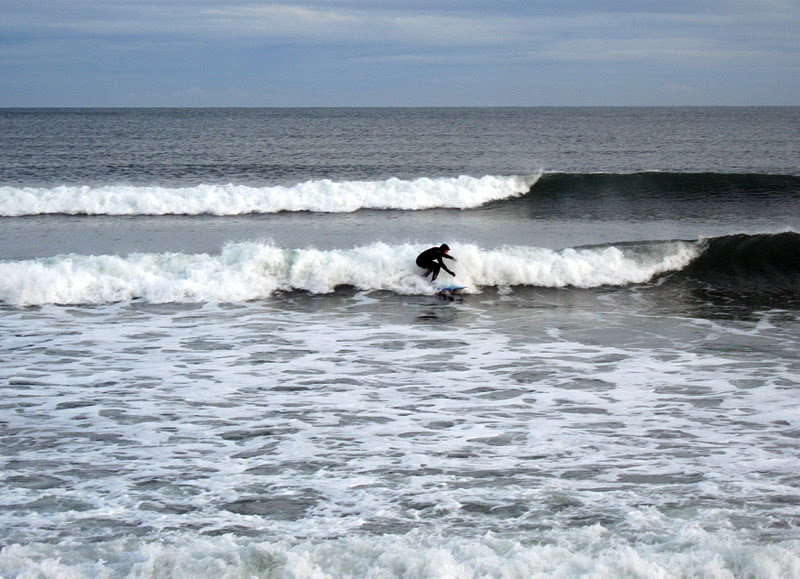
The hurricane force winds which battered Fraserburgh on Thursday and Friday have died down and almost all the snow  miraculously melted  overnight. The profile of the beach has been noticeably steepened and the edge of the dunes has been eroded by the force of the storm.  This morning Grey Granite was pleased to notice how many people were enjoying the outdoors, dog walkers, footballers, runners, cyclists and several intrepid surfers riding the waves.

Sunday, 4 December 2011

Early December


The first few days of December have brought a dramatic change in the weather, strong winds, night frosts  and the first snow falls of the winter have replaced the record breaking mild temperatures which we basked in during  much of November.
 
Bare trees in Philorth Woods
  
Bricktop Mushroom, (Hypholoma sublateritium) characteristically growing in a large colony on a decaying hawthorn stump provided a splash of colour by the side of the A952 at Philorth

December 4th brought the first flurries of snow, enough to frost Tiger Hill and the beach above the high water mark. This is a week later than the first snowfall of last year.

Saturday, 3 December 2011

Pitfour:The Blenheim of the North

The woods close to the main road at Cartlehaugh consist of mature trees predominantly beech, ash, sycamore and elm.
Grey Granite has been reading Pitfour: The Blenheim of the North by Alex Buchan. This excellent, thoroughly researched  book is a fascinating history of the estate. Inspired by the account of the changing fortunes of the estate Grey Granite and Rufus decided to explore the remnants of the once extensive property. The woods close to the main road consist of mature trees predominantly beech, ash, sycamore and elm.

Taitswell, the factor's house near the East Lodge

Pitfour Lake, an artificial area of water covering an area of about 50 acres created by James Ferguson,the third Laird of Pitfour, as part of a major landscaping project which transformed the parkland early in the 18th century. Creating the lake involved diverting the main driveway to Pitfour House and in the process building two bridges to carry it across two islands formed by the natural terrain and increased water level.The lake caused great ill feeling between the Ferguson's of Pitfour and their neighbours the Russells of Aden who were afraid that it would flood their adjacent property.

A beech tree looking incongruous in  a field of neeps, once presumably part of the parkland surrounding the lake. The lake was possibly built partly as a reservoir for the  canal which, it was ambitiously intended, would link Pitfour to the sea.

A whooper swan, there were also  mallards and cormorants on the lake which is stocked with assorted fish.

The derelict Temple of Theseus overlooking the lake, a replica of a Greek Temple built shortly after the construction of the lake. It may have been used as a cold water bath or to house alligators. The Angling Club members  now tie their boats up in front of the Temple


The Kennels with porticoes and columns,typifies the classical style of architecture throughout the estate

An extremely late flowering foxglove growing in a sheltered spot beside the anglers' clubhouse

The avenue of stately beeches lining the road from Taitswell to the Mintlaw to Fraserburgh road, an iconic feature of the improved landscape.

Friday, 2 December 2011

Delgatie Castle

Grey Granite and Dr Anne arranged to meet at Delgatie Castle, Grey Granite parked in the lower, visitors car park. Dr Anne, having Hay connections, prudently parked closer to the castle. The woodland tracks through the estate look inviting but today in the heavy rain were awash. However, Grey Granite enjoyed the short walk up through the castle garden to the castle and hoped to take some photographs on the way back. She anticipated that the rain would have gone off by then. Alas, there was at that point a heavy downpour which made photography impossible and flooded several of the minor roads on Grey Granite's  cross country route home from King Edward.
Delgatie Castle from the visitors car park. The imposing castle was a seat of the Hays, Earls of Erroll and High Constables of Scotland. The castle has been much altered but the original 5 storey square keep probably dates from 1570. Mary Queen of Scots spent three days at Delgatie after the Battle of Corrichie. A Delgatie Hay was standard bearer to Montrose.

Remains of a waterwheel by the Laundry

The pink washed laundry, now Forester's Cottage was built about 1800 and has extraordinary ogee windows and crockets (the ornate little towers at each corner of the roof)

Cannons by the main entrance to the castle overlook the park lands and trout fishery

Grey Granite hopes that it will be possible to revisit the castle and grounds in better weather
 and to follow the route suggested by the Walkhighlands website.